
Understanding Wrist Size for Watches: A Comprehensive Guide
Finding the ideal watch fit involves understanding your wrist’s dimensions and how they relate to case size, ensuring both comfort and aesthetic appeal.
This guide simplifies the process, covering measurement techniques, standard ranges, and anatomical considerations for a perfect match,
allowing for precise movements, grip strength, and sensory perception with every timepiece you choose.
What is Wrist Size and Why Does it Matter?
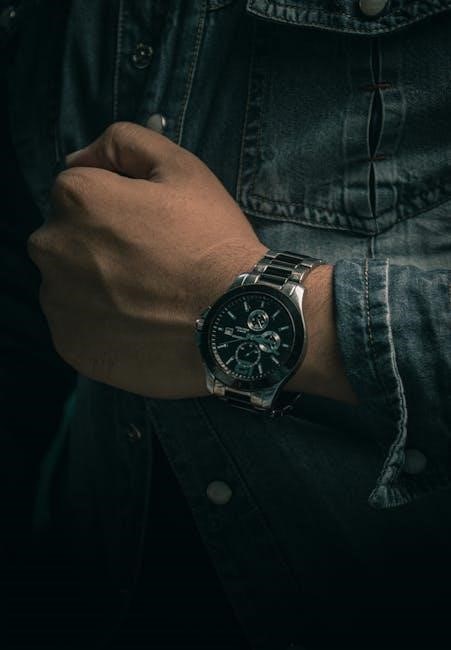
Wrist size, fundamentally, is the circumference of your wrist, typically measured just below the wrist bone. Determining this measurement isn’t merely about aesthetics; it’s crucial for comfort and proportional appearance when wearing a watch. A watch that’s too large can feel bulky and awkward, potentially causing discomfort or even pressure points. Conversely, a watch that’s too small might appear disproportionate and lose its visual impact.
The wrist acts as a pivotal joint, enabling a wide range of motion, and a properly sized watch complements this functionality without hindering it. Understanding your wrist size allows you to navigate the diverse world of watch case diameters and lug-to-lug measurements effectively. It ensures the watch sits securely and comfortably, moving with your wrist rather than against it. Ignoring wrist size can lead to a frustrating experience, impacting both style and daily wearability.
Measuring Your Wrist Accurately
Accurate wrist measurement is the cornerstone of finding the perfect watch fit. The most reliable method involves using a flexible measuring tape. Wrap it snugly, but not tightly, around your wrist bone – the prominent bump on the underside of your wrist. Ensure the tape is parallel to the floor for a consistent reading. If you don’t have a flexible tape, use a string and then measure the string with a ruler.
Avoid measuring over clothing, as this will add unnecessary bulk to the measurement. It’s best to measure your bare wrist. Repeat the measurement a couple of times to ensure consistency. Remember to record the measurement in millimeters or inches. When comparing your measurement to watch specifications, prioritize the lug-to-lug dimension, as it directly impacts how the watch sits on your wrist and prevents overhang.
Standard Wrist Size Ranges
Understanding standard wrist size ranges provides a helpful starting point for selecting a watch. Generally, wrists are categorized into three main sizes: small, medium, and large. Small wrists, measuring under 6 inches, typically suit watches with case diameters of 36mm or less. Medium wrists, ranging from 6 to 7 inches, comfortably accommodate watches between 38mm and 42mm.
Larger wrists, 7 inches and above, can handle watches with case diameters of 42mm and greater. However, these are merely guidelines; personal preference plays a significant role. Consider the lug-to-lug measurement alongside the case diameter for optimal fit. A watch that appears proportional on one wrist may look oversized or undersized on another. Remember that wrist anatomy and watch weight also contribute to overall comfort.
Small Wrists (Under 6 inches)
For wrists under 6 inches, prioritizing proportion and comfort is key. Watches with case diameters between 30mm and 36mm generally offer the best fit, avoiding an overly bulky appearance. Smaller case sizes ensure the watch doesn’t overwhelm the wrist, maintaining a balanced aesthetic. Lug-to-lug measurements are crucial; ideally, they should be 40mm or less to prevent overhang.
Consider lighter watch materials and thinner profiles to enhance comfort. Avoid overly thick or heavy watches, as they can feel cumbersome. Dress watches and minimalist designs often complement smaller wrists beautifully. While larger watches are trending, a well-proportioned timepiece will always look more refined on a smaller frame. Focus on elegance and subtlety for a classic look.
Medium Wrists (6 ౼ 7 inches)
Individuals with wrists measuring between 6 and 7 inches enjoy considerable versatility in watch size selection. Case diameters ranging from 38mm to 42mm typically provide a balanced and harmonious look. This range accommodates a wide variety of watch styles, from classic dress watches to more robust sport models. Lug-to-lug measurements should ideally fall between 42mm and 48mm, ensuring a comfortable and secure fit without extending beyond the wrist’s edges.
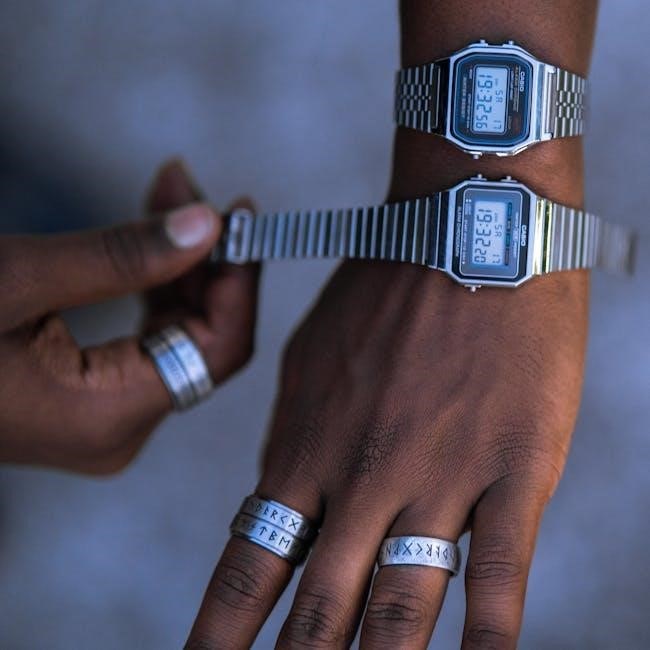
Medium wrists can handle a moderate watch weight without discomfort. Experiment with different strap materials and styles to find what feels best. This wrist size allows for exploration of various aesthetics, offering a sweet spot between understated elegance and noticeable presence. A 38mm case offers sophistication, while 42mm provides a bolder statement.
Large Wrists (7+ inches)
For wrists measuring 7 inches or greater, larger watch sizes generally create a more proportional and visually appealing aesthetic. Case diameters of 42mm and above are recommended, with many individuals comfortably wearing watches up to 46mm or even larger, depending on personal preference. Lug-to-lug measurements should ideally exceed 48mm to ensure the watch doesn’t appear dwarfed by the wrist.
Larger wrists can support heavier watch weights without significant discomfort, allowing for exploration of substantial timepieces like pilot or diver watches. However, it’s crucial to consider the overall balance and avoid excessively bulky designs. A well-proportioned watch will complement a larger wrist, enhancing its strength and presence. Prioritize comfort and ensure the watch doesn’t cause any pressure points.

Watch Case Size and Lug-to-Lug Measurement
Determining the right watch fit requires understanding both case diameter and lug-to-lug distance, crucial factors impacting comfort and aesthetics on your wrist.
The Importance of Case Diameter
Case diameter, measured across the watch face, significantly influences how a watch appears on your wrist. A smaller diameter, like 36mm or 38mm, often suits smaller wrists, creating a proportional and elegant look. Conversely, larger wrists generally benefit from larger case diameters, such as 42mm or 44mm, providing a bolder and more substantial presence.
However, case diameter isn’t the sole determinant of fit. A large diameter can still feel uncomfortable if the lugs extend beyond the wrist’s edges. It’s about visual balance and ensuring the watch doesn’t overwhelm the wrist. Considering your wrist size alongside the case diameter is paramount for achieving a harmonious aesthetic. A balanced sophistication is key, and choosing a diameter that complements your wrist’s proportions enhances the overall appearance.
Understanding Lug-to-Lug Measurement
Lug-to-lug measurement, the distance between the furthest points of the watch’s lugs, is crucial for determining how the watch will actually fit your wrist. Unlike case diameter, which is a visual aspect, lug-to-lug directly impacts comfort and prevents overhang – where the lugs extend beyond the wrist’s edges, causing discomfort and an unbalanced appearance.
Ideally, the lug-to-lug measurement should be equal to or slightly smaller than your wrist’s circumference. Measuring your wrist accurately is therefore essential. If the lugs overhang, the watch will feel awkward and potentially irritate your skin. Comparing the lug-to-lug size to your wrist measurement ensures a secure and comfortable fit, prioritizing functionality alongside aesthetics. This measurement is often more important than case diameter for a truly comfortable experience.
How Lug-to-Lug Impacts Fit
The lug-to-lug measurement profoundly influences a watch’s wearability, dictating whether it feels balanced and comfortable or awkward and intrusive. A watch with a lug-to-lug exceeding your wrist circumference will likely cause the lugs to dig into your skin, creating pressure points and restricting natural movement. This is especially noticeable during wrist flexion and extension.
Conversely, a lug-to-lug significantly shorter than your wrist can make the watch appear disproportionately small, losing visual impact. The goal is a harmonious fit where the lugs sit securely within the wrist’s boundaries, allowing the watch face to be the focal point. Prioritizing lug-to-lug ensures the watch integrates seamlessly with your anatomy, enhancing both comfort and style for all-day wear.

Watch Styles and Ideal Wrist Sizes
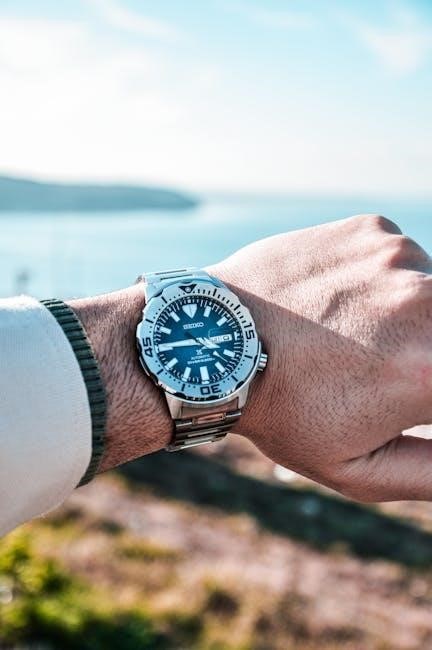
Different watch styles complement varying wrist sizes; dress watches suit smaller wrists, sport watches favor larger ones, and pilot/diver watches require careful consideration for optimal balance.
Dress Watches & Smaller Wrists
For wrists under 6 inches, dress watches are an excellent choice, prioritizing elegance and subtlety. These timepieces typically feature case diameters between 36mm and 38mm, creating a proportional and refined look. Larger cases can overwhelm smaller wrists, disrupting the aesthetic balance.
The key is to maintain harmony between the watch and the wearer’s physique. A smaller case diameter ensures the watch doesn’t appear bulky or disproportionate.
Consider the lug-to-lug measurement as well; it should ideally be equal to or slightly less than the wrist circumference to avoid overhang.
Slim profiles and minimalist designs further enhance the elegance of dress watches on smaller wrists. Avoid overly thick or heavy watches, as they can compromise comfort and visual appeal.
Ultimately, the goal is a timepiece that complements the wrist without dominating it, exuding sophistication and understated style.
Sport Watches & Larger Wrists
Individuals with wrists measuring 7 inches or more can confidently embrace the bolder aesthetic of sport watches. These timepieces often feature larger case diameters, typically ranging from 42mm to 45mm or even larger, providing a substantial and commanding presence. Larger wrists can easily accommodate these sizes without appearing overwhelmed.
Sport watches are designed for durability and functionality, often incorporating robust features and a more substantial build. A larger case size complements this ruggedness, enhancing the overall visual impact.
However, it’s crucial to consider the lug-to-lug measurement to ensure a comfortable fit. While larger cases are suitable, excessive overhang can cause discomfort. Prioritize a watch that sits securely and comfortably on the wrist, allowing for unrestricted movement.
A well-proportioned sport watch will enhance the wearer’s active lifestyle and reflect a sense of confidence and adventure.
Pilot/Diver Watches & Wrist Size Considerations
Pilot and diver watches, known for their legibility and robust construction, often present unique considerations regarding wrist size. These styles typically feature larger case diameters – frequently 40mm and above – to accommodate complex dials and enhanced water resistance. However, a larger size doesn’t automatically equate to a good fit for every wrist.
For wrists 6 inches or smaller, a pilot or diver watch might appear disproportionately large. Individuals with medium wrists (6-7 inches) should carefully evaluate the lug-to-lug measurement to prevent overhang. Larger wrists (7+ inches) can generally handle these bolder designs comfortably.
Consider the watch’s weight as well; heavier models can become uncomfortable during extended wear. Prioritize a secure and balanced fit, ensuring the watch doesn’t shift or cause pressure points. Ultimately, the goal is to find a timepiece that complements your wrist size and lifestyle.
Wrist Anatomy and Watch Comfort
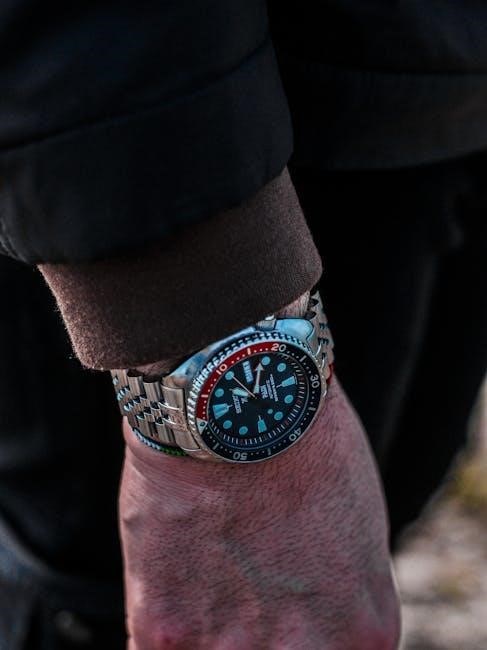
The wrist’s intricate structure—bones, ligaments, tendons, and nerves—impacts watch comfort significantly. Understanding these anatomical features helps avoid pressure points and ensures a secure, enjoyable fit.
Key Anatomical Structures of the Wrist
The wrist’s complexity stems from its eight carpal bones arranged in two rows, connected by numerous ligaments providing stability and a wide range of motion. These bones articulate with the radius and ulna of the forearm, forming the radiocarpal joint, crucial for flexion and extension.
Ligaments, like the volar and dorsal radiocarpal ligaments, reinforce the joint, preventing excessive movement. Tendons from forearm muscles pass through the wrist, enabling finger and hand movements; the flexor and extensor tendons are particularly important. The carpometacarpal (CMC) joints connect the wrist to the hand, with the thumb’s CMC joint allowing opposition – a key function for gripping.
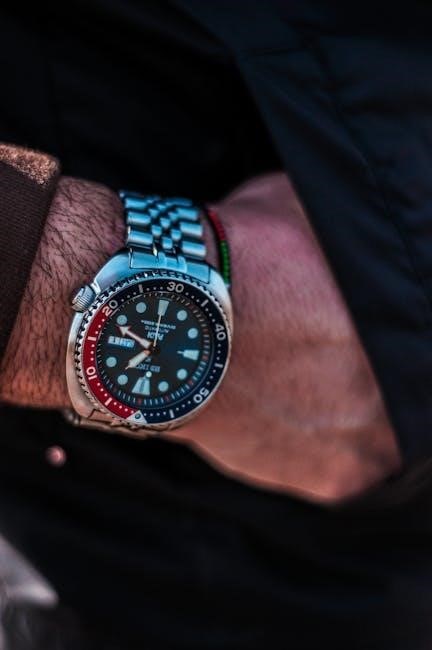
Nerves, including the median and ulnar nerves, traverse the wrist, providing sensory perception and motor control. The median nerve passes through the carpal tunnel, making it susceptible to compression (carpal tunnel syndrome). Blood vessels supply the wrist with necessary nutrients and oxygen. Understanding these structures is vital for appreciating how a watch interacts with the wrist and impacts comfort.
How Watch Weight Affects Comfort
A watch’s weight significantly impacts perceived comfort, particularly with larger case sizes or heavier materials like stainless steel or gold. Heavier watches can create pressure points on the wrist, leading to discomfort during prolonged wear, especially for individuals with smaller wrists or sensitive skin. The distribution of weight is also crucial; a well-balanced watch feels more secure and comfortable than one that feels top-heavy or uneven.
Wrist anatomy plays a role; prominent bone structures can exacerbate pressure from a heavy watch. Lighter materials like titanium or aluminum offer a more comfortable experience, reducing strain on the wrist joint. Consider the watch’s overall design, including the case shape and strap material, as these factors influence how weight is distributed and perceived.
Proper strap adjustment is essential to ensure a snug but not constricting fit, minimizing movement and preventing chafing caused by a heavy watch shifting on the wrist.
Avoiding Pressure Points and Discomfort
Minimizing pressure points is key to comfortable watch wear, especially for those prone to wrist sensitivity or conditions like carpal tunnel syndrome. A watch that’s too tight restricts blood flow and can irritate nerves, causing discomfort or even pain. Conversely, a loose watch shifts, creating friction and potential chafing.
Pay attention to the caseback’s shape; a flat caseback distributes pressure more evenly than a highly sculpted one. Consider the lug design; curved lugs generally conform better to the wrist’s contours, reducing pressure. Strap material matters; softer materials like silicone or nylon are gentler on the skin than stiff leather or metal bracelets.
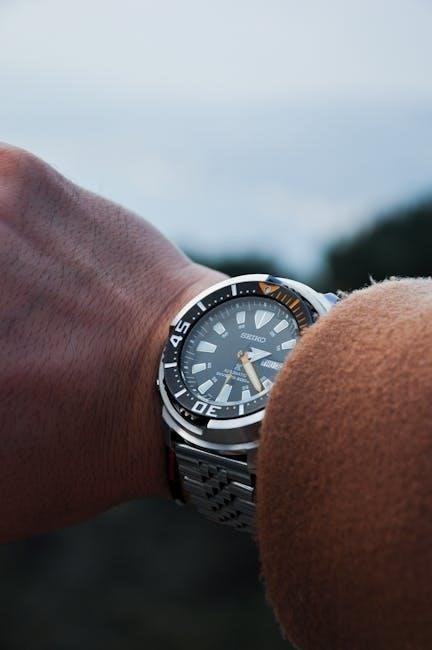
Regularly adjust the strap to accommodate changes in wrist size due to temperature or activity. If discomfort persists, explore alternative strap options or consider a lighter, smaller watch.
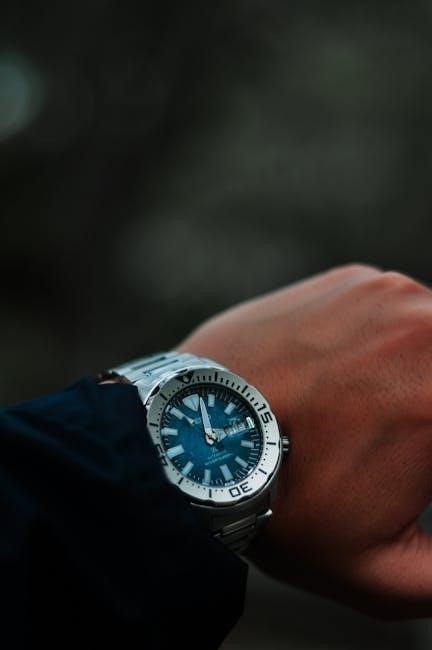
Finding the Perfect Watch Fit: A Summary
Achieving a perfect watch fit is a balance of wrist size, case dimensions, and personal preference. Accurate wrist measurement is the crucial first step, categorizing you into small, medium, or large ranges. Remember that lug-to-lug measurement is paramount, ensuring the watch doesn’t overhang your wrist, preventing discomfort and ensuring aesthetic harmony.
Consider your lifestyle and watch style. Dress watches typically suit smaller wrists, while sport or diver watches can complement larger ones. Prioritize comfort; a watch shouldn’t feel restrictive or cause pressure points. Don’t solely rely on case diameter; a 40mm watch can appear different on varying wrist sizes.
Ultimately, trying on watches is invaluable. Utilize online resources and store visits to experiment with different sizes and styles, finding the timepiece that feels and looks best on your wrist.